
I am a circle holder, facilitator and teacher. I worked for many years (20+) in the voluntary sector holding space for addicts, alcoholics, the homeless and single parents. I have held women’s circles, workshops, taught reiki, drum making, rites of passage for even longer. In corporate jobs I was trained in facilitation. In my voluntary roles I was trained in how to hold a boundaries space with clients and groups. I studied PGCE teacher training when I was in my 20s.
Holding circle is not just lighting candles, speaking softly, and creating an aesthetic of safety. It is not a trend, a title, or something we step into simply because we feel called.
To hold a circle is to take responsibility for human hearts, nervous systems, trauma, and trust. That responsibility is not something to take lightly.
Over the years, I have witnessed- and heard too many stories of- spaces that were meant to be healing, but instead became places of confusion, blurred boundaries, and emotional harm. Spaces where facilitators brought their unprocessed trauma into the room. Spaces where personal needs, validation-seeking, or unresolved wounds leaked into what should have been a contained, grounded, and safe environment.
This is not okay.
A circle holder is not there to process their own pain through the group. They are not there to seek affirmation, to be rescued, or to unconsciously place participants in the role of therapist, witness, or emotional container for them.
A true facilitator understands this: The space is not about you.
It is about the people who have come, often vulnerably, to be held in safety. Safety is not created through intention alone.
It is created through:
- Clear boundaries
- Strong facilitation skills
- Emotional regulation
- Trauma awareness
- Accountability
- Ongoing self-work
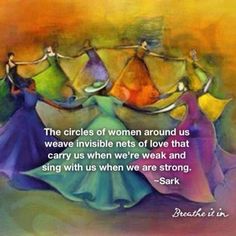 Without these, a circle can quickly become unsafe – even if it looks beautiful on the outside.
And when safety is not properly held, the impact does not stop with the individual.
It ripples out.
Unsafe spaces can create ruptures within communities. They can foster mistrust between participants, create confusion about what is appropriate, and leave people feeling exposed or betrayed. Instead of deepening connection, they fracture it. Instead of strengthening sisterhood, they can quietly erode it.
When a circle is not well-held, participants may leave carrying hurt, resentment, or even shame — not just towards the facilitator, but towards each other. Misunderstandings arise. Boundaries blur. Alliances shift. What was meant to be a space of unity can become a place of subtle division.
And this is one of the most painful consequences of all: The breakdown of trust between women.
There is also an uncomfortable truth here: not everyone who feels called to hold space is ready to do so, a calling is not the same as capacity.
This is why training, experience, and supervision matter. Because when you hold space for others, you are stepping into a role that requires skill, maturity, and deep self-responsibility.
If you are attending circles, workshops, or healing spaces — please use discernment.
You have every right to ask:
- What training does this facilitator have?
- What experience do they hold in working with people and groups?
- Do they understand trauma and boundaries?
- Do they have supervision or mentorship?
- What do others say about working with them?
And just as importantly: how does your body feel in their presence?
Do you feel grounded, respected, and safe?
Or do you feel subtle unease, confusion, or pressure?
Your nervous system knows. Trust it.
This is not about creating fear or division. It is about restoring integrity to spaces that are meant to be sacred.
There are many deeply skilled, devoted, and responsible facilitators doing this work with humility and care. And there are also those who are still in the early stages of their own healing, stepping into roles that require more grounding than they currently have.
Both truths can exist. But we must be willing to name the difference.
Because when space is held well, it can be profoundly healing.
When it is not, it can cause harm that takes time to unravel.
If you are a facilitator reading this, let it be an invitation, not a criticism.
Do your work.
Know your edges.
Seek training.
Stay accountable.
Keep tending to your own healing outside the spaces you hold.
And if you are someone seeking support, community, or healing:
You are allowed to choose carefully.
You are allowed to ask questions.
You are allowed to walk away.
Your safety matters. Always.

Connect with me….. * Rachael Crow *Online teachings * Drum Making* Videos * Blog *Instagram
You must be logged in to post a comment.